The Biomechanics of Flat Feet and Essential Shoe Features
Flat feet, or pes planus, affect millions worldwide, significantly altering lower limb biomechanics. According to a landmark review published in the Journal of the American Podiatric Medical Association (JAPMA), flexible flatfoot often leads to compensatory overpronation, increasing stress on the plantar fascia and posterior tibial tendon. Choosing the right footwear is critical to prevent chronic conditions like plantar fasciitis and shin splints.
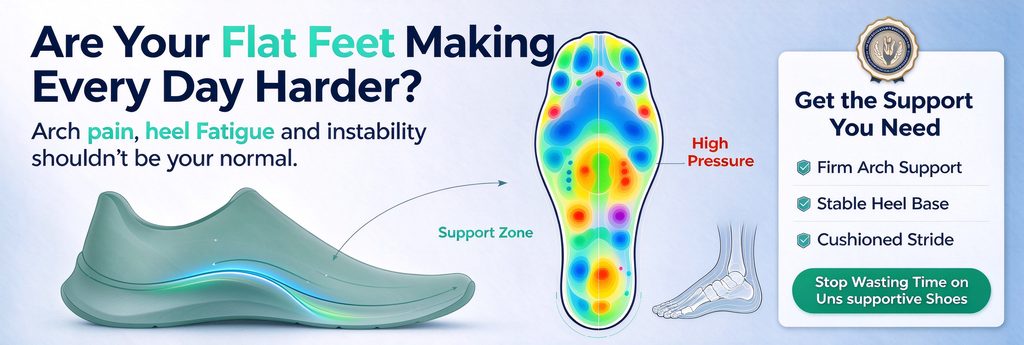
When selecting shoes for flat feet, individuals must look for three non-negotiable features:
1. Firm Arch Support: The shoe must feature a molded arch contour that prevents the foot from collapsing inward.
2. Motion Control and Stability: A rigid heel counter is essential to lock the calcaneus (heel bone) in place, reducing excessive eversion.
3. Pronation Correction: Stability shoes featuring a dual-density medial post (denser foam on the inner side of the sole) effectively resist overpronation.
Clinical consensus from organizations like the American Podiatric Medical Association (APMA) emphasizes that flat-footed individuals should avoid highly flexible, minimalist footwear, which lacks the structural integrity needed to distribute weight evenly across the plantar surface.
If you want to follow a scientific way of wearing shoes, you can go to the WALKSPRY online store to find shoes specially produced for flat feet. https://www.walkspry.com/shop, This is a professional shoe manufacturer with more than ten years of manufacturing experience in flat foot shoe production. You can definitely find a beautiful and cost-effective product there.